10 Activity No.1 Reading for understanding and Creation of a Glossary of concepts terms
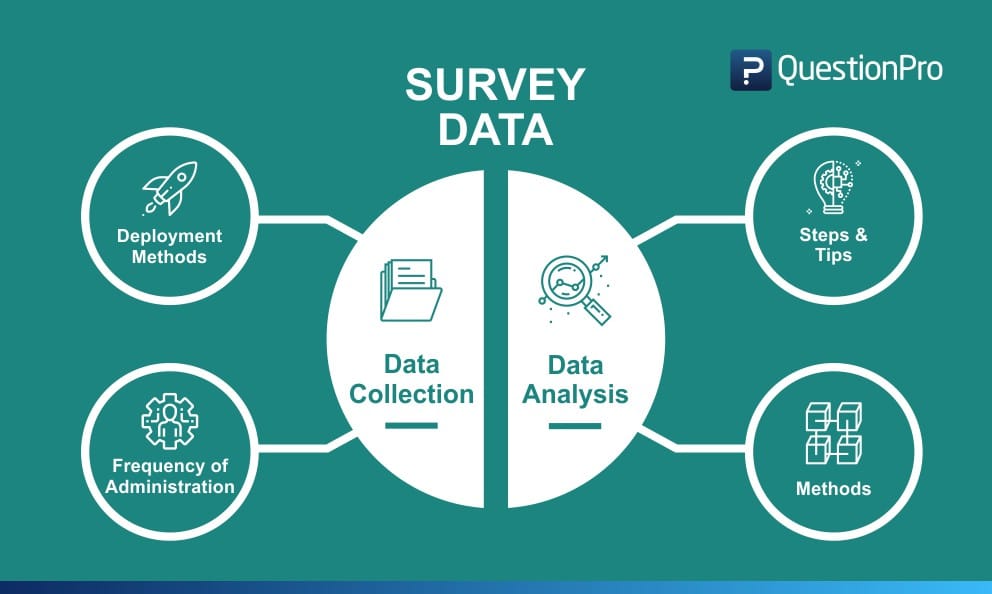
Data collection
Noun
Data collection is defined as the procedure of collecting, measuring and analyzing accurate insights for research using standard validated techniques. A researcher can evaluate their hypothesis on the basis of collected data. In most cases, data collection is the primary and most important step for research, irrespective of the field of research. The approach of data collection is different for different fields of study, depending on the required information.
Example: Further data collection and analysis is needed to provide a basis on which to hold those responsible to account.
es: Recopilación de datos
Diagnostic Research
Adj,Noun
The researcher is looking to evaluate the underlying cause of a specific topic or phenomenon. This method helps one learn more about the factors that create troublesome situations.
This design has three parts of the research:
· Inception of the issue
· Diagnosis of the issue
· Solution for the issue
Example: Programs, to assessing experiences, to developing diagnostic research, a to being aware of the importance of the political.
es: Investigación de diagnóstico
Experimental research
Noun
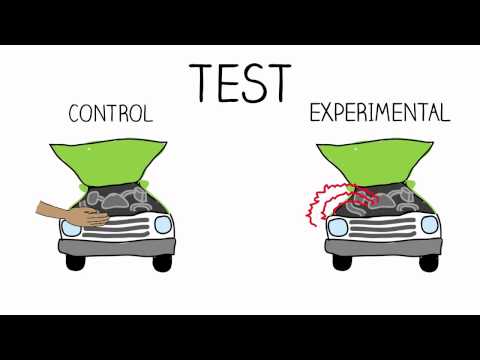
Establishes a relationship between the cause and effect of a situation. It is a causal design where one observes the impact caused by the independent variable on the dependent variable. It is a highly practical research method as it contributes to solving a problem at hand. The independent variables are manipulated to monitor the change it has on the dependent variable.
Example: Her experimental research focused on memory processes and language, and the influence of drugs on cognitive processes.
es: Investigación experimental
Generalization
Noun
The outcome of your design should apply to a population and not just a restricted sample. A generalized design implies that your survey can be conducted on any part of a population with similar accuracy.
Example: That generalization made, however, it is also clear that no simple or single policy response can be appropriate.
es: Generalización
Measurement
Noun
Measurement is the study of how numbers are assigned to objects and phenomena, and its concerns include the kinds of things that can be measured, how different measures relate to each other, and the problem of error in the measurement process. Any general theory of measurement must come to grips with three basic problems: error; representation, which is the justification of number assignment; and uniqueness, which is the degree to which the kind of representation chosen approaches being the only one possible for the object or phenomenon in question.
Example: A quantitative measurement is a figure that reflects information put together using a quantitative method.
es: Medición
Qualitative
Adjective
Determines relationships between collected data and observations based on mathematical calculations. Theories related to a naturally existing phenomenon can be proved or disproved using statistical methods.
Example: The assignments are given an overall quantitative grade as well as the qualitative data.
es: Cualitativo
Quantitative
Adjective
Is the cases where statistical conclusions to collect actionable insights are essential. Numbers provide a better perspective to make critical business decisions.
Example: GATT also forbade use of quantitative restrictions.
es: Cuantitativo
Research Design
Noun
Research design is the framework of research methods and techniques chosen by a researcher. The design allows researchers to hone in on research methods that are suitable for the subject matter and set up their studies up for success.
The design of a research topic explains the type of research (experimental, survey, correlational, semi-experimental, review) and also its sub-type (experimental design, research problem, descriptive case-study).
There are three main types of designs for research: Data collection, measurement, and analysis.
Example: I recognized from the stories they told that a pat research design would generate literally more garbage information.
es: Diseño de Investigación
Survey research
Noun
Survey Research is defined as the process of conducting research using surveys that researchers send to survey respondents. The data collected from surveys is then statistically analyzed to draw meaningful research conclusions.
Example: This committee should be made up of persons who are leaders in areas such as survey research, and education management.
es: Investigación por encuestas
Validity
Noun
There are multiple measuring tools available. However, the only correct measuring tools are those which help a researcher in gauging results according to the objective of the research. The questionnaire developed from this design will then be valid.
Example: While these regimes have not lived up to expectations, nobody is questioning their validity or relevance.